How to protect your fleet from winter’s wrath
This article provides important tips on how to keep your drivers safe and your vehicles operational this winter.
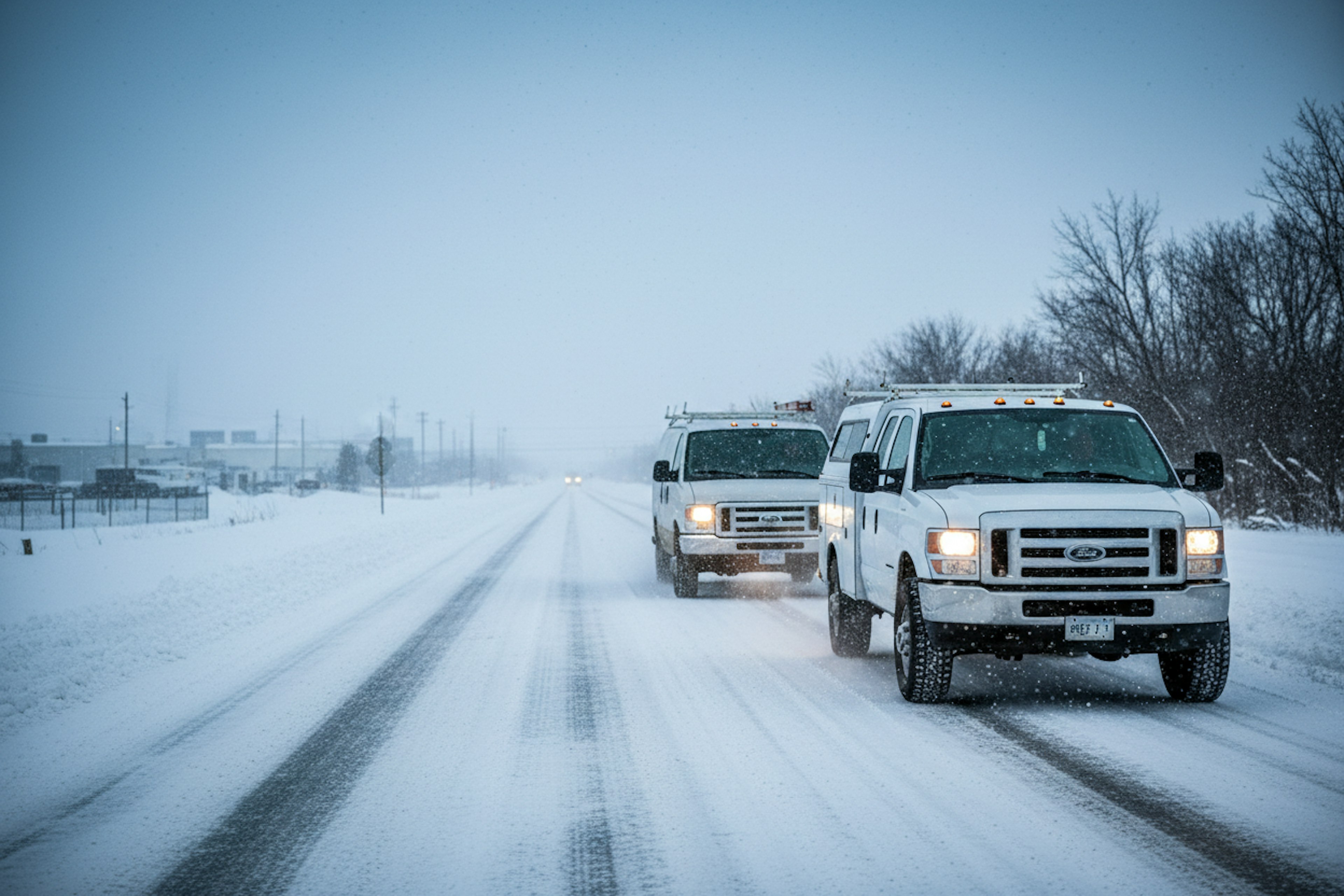
There are steps you can take so that no matter what winter tosses your way, you can protect your fleet, reduce downtime, and keep operations running safely.
Winter weather poses significant challenges to fleet operations. According to the U.S. Department of Transportation, 24% of weather-related crashes occur on snowy, slushy, or icy pavement, with an additional 15% happening during snowfall or sleet. Beyond safety risks, cold weather causes substantial operational impacts—with fleets experiencing up to 70% more breakdowns without proper preventive maintenance.
This guide provides essential winterization strategies to help you minimize downtime, enhance safety, and protect your investment throughout the challenging winter months.
The impact of unpreparedness
Winter weather disrupts fleet operations in multiple ways:
- No-starts and jump-starts waste 30-60 minutes per incident
- Fuel gelling can sideline entire fleets
- Excessive idling burns fuel and shortens engine life
- Air brake lines freeze, causing system failures
- Poor visibility significantly increases accident risk
The good news? Strategic winterization eliminates these problems before they occur, keeping your fleet productive and your drivers safe.
Essential winterization systems
Engine block heaters
- Reduces cold starts and excessive idling time
- Diesel-fired coolant heaters (Webasto, Espar systems)
Auxiliary heat
- Improves cab heat and driver comfort
Winter fronts and grille covers
- Faster engine warm-up
- 5-10% improved fuel economy
- Better cab heat retention
Battery systems
- High CCA (Cold Cranking Amp) batteries rated 800+ for diesel engines
- AGM (Absorbed Glass Mat) batteries for extreme cold performance
- Battery blankets and warmers
- Remote start systems to pre-warm engines
Fuel system protection
- Heated fuel filters and fuel lines prevent gelling
- Immersion tank fuel heaters
- Water separators to avoid ice formation in fuel systems
Winter Tires & Tread Selection
- Mud and snow-rated tires for improved traction
- Open shoulder treads: Maximum bite for icy, packed snow conditions and heavy snow/rural operations
- Closed shoulder treads: Best for highway/mixed-road operations, maximum wear life, and fuel efficiency
- Maintain tread depth of 4/32 inch or more (NHTSA recommendation)
Automatic tire chain systems
- Driver-activated from the cab for immediate traction
- Meets state chain law requirements
Visibility and electrical systems
- Heated mirrors maintain clear visibility during storms
- Additional work lights maintain brightness and reduce accident risk
- High-intensity strobes and beacons for enhanced visibility in whiteout conditions
- High-output alternators (200-370 amp) support heaters, lights, and accessories at idle
- Automatic air tank drains prevent brake system freezing
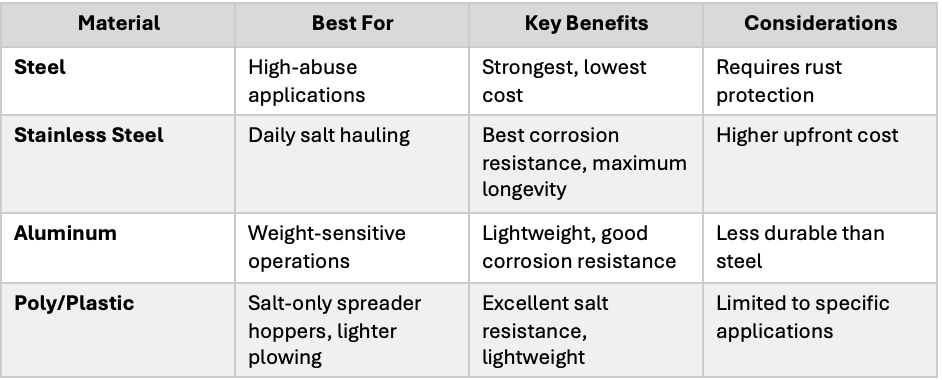
Material Selection for Snow Equipment
Choosing the right materials for dump bodies and plows significantly impacts durability and longevity in salt and winter conditions:
Driver safety and training
According to the NHTSA, safety belts reduce the risk of fatal injury by 45%. Winter driving requires specialized training beyond standard practices:
- Slow down—speeds and snowy/icy roads don’t mix
- Increase following distance significantly on slick surfaces
- Understand antilock brake systems and proper winter braking techniques
- Account for vehicle height, weight distribution, and wind interaction
- Avoid sudden lane changes or abrupt braking on icy surfaces
- Keep emergency supplies: water, food, blankets, and flashlights
Pre-winter maintenance checklist
- Inspect and test batteries; replace if over 3 years old
- Check all fluid levels and switch to winter-grade oil if needed
- Inspect tire tread depth and pressure (check every 4 weeks in winter)
- Test heating systems and defrosters
- Inspect wiper blades and fill winter-rated washer fluid
- Check air brake systems for moisture
- Verify all lights and strobes are functioning
- Test block heaters and auxiliary heating systems
Your return on investment
Strategic winter preparedness delivers measurable results:
- Preventive maintenance reduces winter breakdowns by up to 70%
- Fleet vehicles with regular preventive maintenance have 50% fewer no-starts in cold weather
- Properly maintained fleets see 3-5x lower winter repair costs
- Reduced insurance premiums through lower incident rates
- Enhanced driver safety and reduced liability exposure
Mike Albert can help defend your fleet from winter’s bite.
Don't let winter weather catch your fleet unprepared. Mike Albert Fleet Solutions offers comprehensive winter upfit consultations to assess your specific needs and recommend the right equipment to keep your fleet running safely and efficiently all season long.
Schedule a winterization consult today.
Skills covered in the class
Fleet Safety
Operational Efficiency
Optimal Vehicle Health
Data-Driven Decision Making
Did you enjoy this class?
Share it with your organization and colleagues.